DroneIQ
Facts-first DJI comparison: sourced specs, CE not FCC, UK class, prices, and whether you would notice the difference.
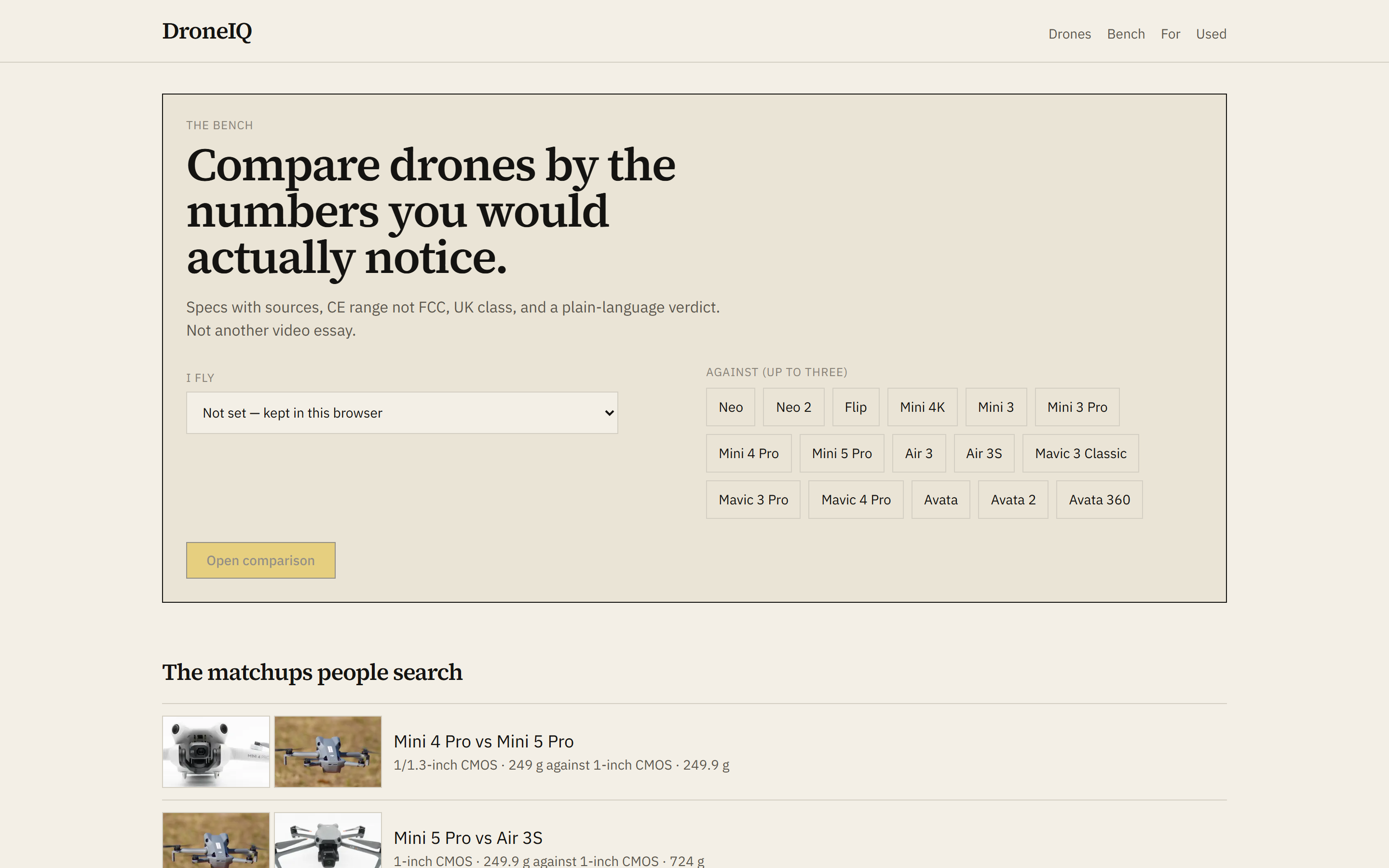
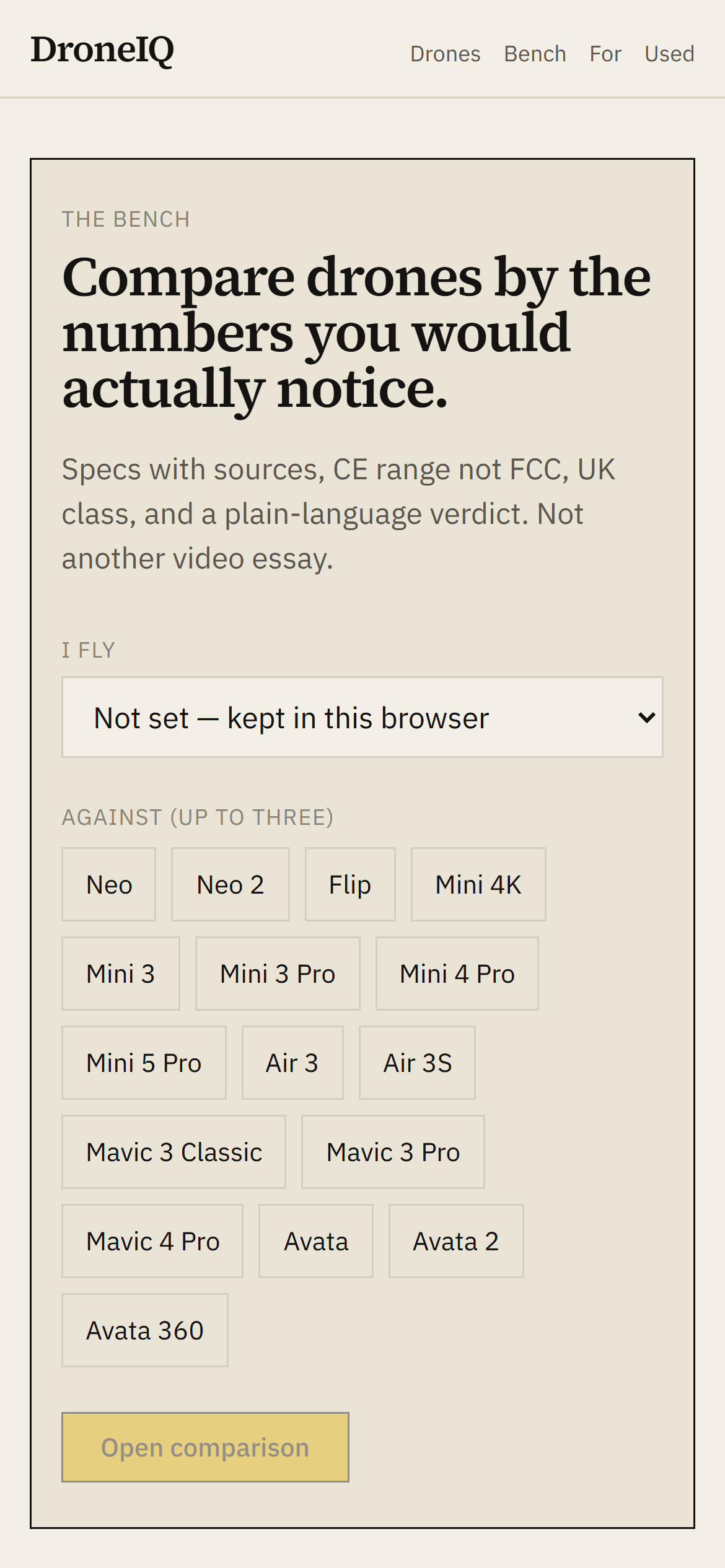
Live captures of droneiq.pro, taken automatically
Detail
Twenty-three DJI aircraft and 35 accessories across 314 comparison pages, each spec carrying the source it came from and the date it was read. Two things it does that the spec sheets do not: it quotes CE transmission range rather than FCC, because UK and EU firmware is limited and the published figure is on average 1.7× what you will actually get — and it states UK class marking and whether Flyer ID or Operator ID is required, which is the part that decides whether you can legally fly the thing you just bought.
The short version
Every drone spec sheet on the internet republishes the manufacturer’s transmission range, and in the UK that number is wrong — DJI publishes the FCC figure, European firmware runs CE-limited, and the gap averages 1.7×. A Mavic 4 Pro advertised at 30 km does 15. DroneIQ is the only one of these that prints the number you will actually fly.
The second useful thing is legal rather than technical. UK class marking, Flyer ID, Operator ID, and the 250 g line decide what you are allowed to do with a drone, and they are usually a footnote if they appear at all. Here they sit on the record next to the weight, because for a lot of buyers that is the whole decision.
One hundred and twenty comparison pages in a category people genuinely search before spending several hundred pounds, each with its own canonical, its own title, and full content without JavaScript. It launched with the SEO baseline already in place rather than retrofitted — the difference between this and AircraftIQ’s first six months.
- Domain
- droneiq.pro
- Sector
- Consumer tech